SAN DIEGO — San Diego City Councilmember Raul Campillo has withdrawn his longstanding support for the City’s automated license plate reader (ALPR) program and is demanding its immediate suspension after the San Diego Police Department used the Flock Safety cameras to track one of its own officers and a domestic violence victim during an internal affairs investigation.
Campillo, a former prosecutor in the City Attorney’s office, said Thursday that the Department’s use of the technology “calls the entire program into question.” In a written statement, Campillo noted that he had previously backed the cameras as a tool for solving and preventing serious crime, but added that his support “has never been unconditional.”
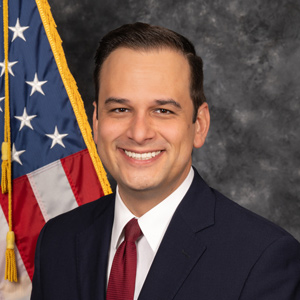
Raul Campillo
“Learning that the Police Department used ALPRs inappropriately to surveil one of their own and a member of the public calls the entire program into question,” Campillo said. “Public trust is not optional, and accountability is not negotiable. A tool intended to protect our community cannot be allowed to become a means of inappropriate surveillance. Until these serious concerns are fully addressed and the safeguards necessary to prevent further misuse are demonstrated, I am withdrawing my support, and I am demanding that the program be immediately suspended and an audit be conducted of its use within our Police Department.”
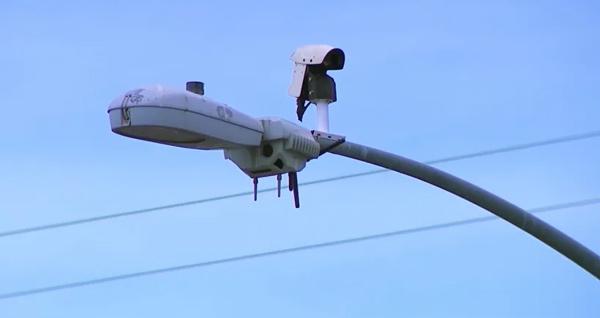
San Diego operates a network of roughly 500 Flock Safety automated license plate reader (ALPR) cameras, which are already at the center of a major City Council push to terminate the program that is scheduled to be heard at the City Council next week. License plate readers capture and track vehicles by taking pictures of their plates, along with its location and time stamp.
The case that prompted Campillo’s shift involved former Officer Miguel Gonzalez. According to internal affairs documents posted by the City, Gonzalez responded to a domestic violence call in February 2025 and later began a romantic and sexual relationship with the alleged victim. Investigators alleged he went to her home while on duty and had sexual intercourse with her. Gonzalez admitted to the relationship and is no longer with the Department.
During the internal affairs probe, investigators had the license plates of both Gonzalez’s personal vehicle and the woman’s vehicle searched through the Flock database to determine whether the two cars had been near each other. The search returned no results.
SDPD Communications Manager Ashley Nicholes confirmed that Internal Affairs used the ALPR system in six administrative investigations involving specific allegations of employee misconduct. The Department has defended the practice, stating that its policy does not limit the technology to criminal investigations and that it can be used for other purposes, including finding missing persons or responding to emergencies. Officials said the Department does not use the cameras for routine monitoring of employees or the public.
Campillo’s change of position is significant. He is now the sixth member of the nine-person City Council to oppose continued use of the Flock cameras. A sixth vote would create a veto-proof majority capable of overriding any veto by Mayor Todd Gloria. The full City Council is scheduled to review the city’s surveillance technologies, including the ALPR contract, on Monday, November 16.

Privacy advocates and some council members have long raised concerns about the roughly 500 Flock cameras and license plate readers mounted on streetlights across San Diego, which collect and store data on vehicles for up to 30 days (longer if tied to an investigation). Critics have warned about the risk of misuse, especially against vulnerable residents, and about potential sharing of data beyond intended purposes. The city is already facing legal challenges over the system.
For community members—particularly survivors of domestic violence and those in neighborhoods that have historically faced higher levels of police scrutiny—the revelation that the technology was turned on a victim who had called police for help has intensified questions about oversight and trust.
Campillo, first elected in 2020 and re-elected in 2024, is considered a front-runner for Mayor in 2026 when Todd Gloria will complete his second and last term. Another sitting Councilman, Sean Elo-Rivera, is also expected to run for Mayor, along with other potential candidates, including Congressman Scott Peters and San Diego County Supervisor Monica Montgomery Steppe.