A bill amended during the final days of California’s legislative session to protect a controversial San Diego development project from certain environmental lawsuits has passed both houses of the Legislature and now awaits action by Governor Gavin Newsom.
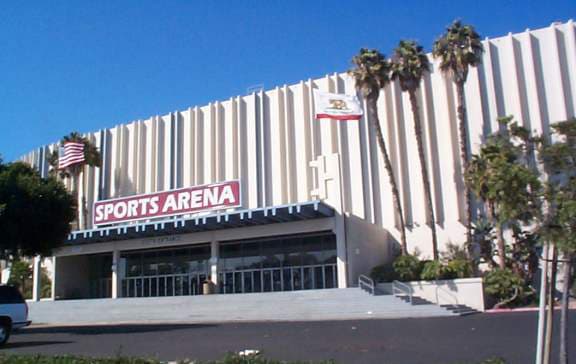
Senate Bill 344, authored by Senator Dr. Akilah Weber Pierson, was first introduced in February 2025 to deal with the disposal of human remains at sea, but was gutted of its language and amended three weeks ago to specifically protect the Midway Rising project proposal to rebuild the current Sports Arena site in the Midway area of San Diego.
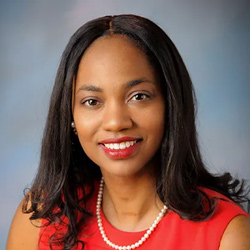
Senator Dr. Akilah Weber Pierson
The Midway Rising project is proposed to include 4,254 new residential units, with 2,000 being deed-restricted affordable homes at or below 80 percent of the area median income, up to 130,000 sq. ft. of commercial space, approximately 14.5 acres of public parks and open space, and a new 16,000-seat multipurpose entertainment center to replace the current arena built in 1966.
The San Diego City Council entered into an exclusive negotiating agreement with the Midway Rising team, led by developer Brad Termini’s Zephyr Development company, in late 2022. Termini’s team was one of three final bidders for the project.
Weber first introduced another bill, SB 958, in February 2026, titled “California Environmental Quality Act: exemption: City of San Diego: Midway Rising Specific Plan” and listed all of the specific details of the project.
After receiving pushback from community members, Weber Pierson removed all references to Midway Rising and replaced them with general eligibility criteria. Among other requirements, a qualifying project would have occupied more than 40 acres, carried an estimated construction value exceeding $100 million, undergone a project-specific environmental impact review, and paid prevailing and living wages to a skilled and trained workforce.
The Midway Rising project would have met all of those items.

Weber Pierson continued to receive criticism for her seemingly targeted bill until she amended the bill in the final days of the legislative session, reducing the bill to only a few paragraphs, finding that the “environmental impacts of a project that are associated with increased building height alone, including, but not limited to, air circulation, noise and light refraction or reflection, shadow, or the potential to attract wildlife, shall not be considered significant impacts on the environment if the project meets” certain conditions, including that the use and density of the project is otherwise analyzed in a certified environmental impact report, the project is on a previously graded infill site, there are no sensitive biological resources physically present on the site, and that the project is not for industrial use.
Weber Pierson also struck out all of the language that made reference to prevailing and living wages, a requirement usually pushed by labor unions.
Again, the Midway Rising project still met all of the bill’s criteria.
The bill was thought to have been stuck in the legislative process, and was not expected to pass, according to well-placed sources in Sacramento.
But then, a few days before the end of the legislative session, Weber Pierson inserted the original language of SB 958 into SB 344 to again specifically help protect the Midway Rising project from potential lawsuits based on potential inadequacies of the environmental review.
The final bill provides that the Midway Rising Specific Plan Subsequent Final EIR, once certified by the City Council, will be deemed sufficient, adequate, and complete for compliance with CEQA. It will also be final and conclusive for purposes of reliance on that report.
The provision could foreclose CEQA lawsuits challenging the legal adequacy of the EIR, although it would not necessarily bar claims brought under other laws or actions seeking enforcement of the project’s mitigation requirements.
The San Diego City Council has not yet approved the EIR for the project.
SB 958, with its slimmed down langauge, also passed both houses of the Legislature.
Governor Newsom has until the end of the month to sign passed bills into law, veto them, or let them become law without his signature.
CONTROVERSIAL FROM THE START
The Midway Rising project became controversial even before its selection in September 2022 after La Prensa San Diego broke the story that City staffers claimed they were not allowed to properly vet Zephyr’s proposal because Mayor Todd Gloria was pushing for its selection before the City Council acted on it.
In 2020, Termini and his wife became the largest personal donors to Todd Gloria’s mayoral election after they gave $100,000 in political contributions to a campaign committee set up by the Laborers’ International Union of America (LiUNA). That committee was run by local political consultant Dan Rottenstreich, husband of Bridget Browning, the head of the region’s largest union organization.
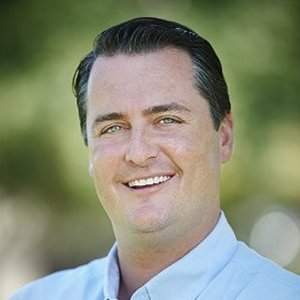
Brad Termini
Termini, originally from Buffalo, New York, is also pursing the development of a 47-acre marijuana processing project in Buffalo. His grandfather, John Termini, was a controversial union official in LiUNA in Buffalo in the 1950s, and was known as an “associate” of the Buffalo crime family. The FBI eventually charged several people involved in the Buffalo LiUNA local, leading to the local union’s takeover by the international union.
The day before the Council committee meeting to select a developer, the Midway Rising team sent a letter signed by Termini to the City expressing its commitment to build the project, promising they would “not sell or flip any project entitlements to other developers or development teams.”
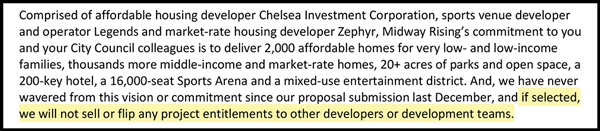
Paragraph from Termini's letter to City
During the City Council’s Land Use Committee meeting on September 8, 2022, labor leader Bridget Browning spoke “in strong support of the Mayor’s recommendation” to select the Midway Rising team.
As the leader of the San Diego-Imperial Counties Labor Council and President of HERE Local 30, the union of hospitality workers, Browning said all three final bidders were “good projects” but called the Midway Rising proposal the “best project” because it included a 200-room hotel committed to employing unionized workers.
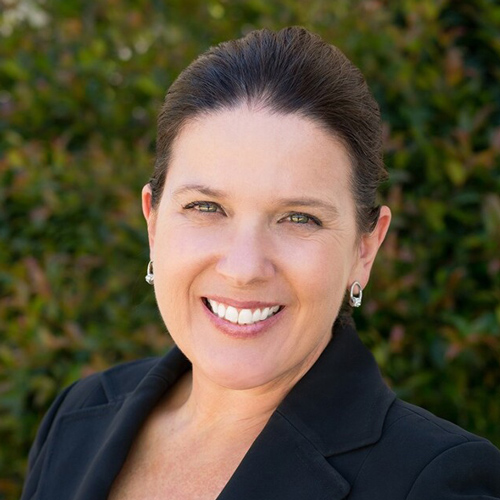
Bridget Browning
“Because Midway Rising has the most number of affordable units and will create the most number of permanent union jobs, it is absolutely the best project to go forward,” Browning said during her testimony before the Councilmembers.
Browning and her Labor Council had endorsed and supported eight of the nine Council members, with the exception of Vivian Moreno.
The Committee members voted 3-0 to select Termini’s group, with Councilmembers Joe LaCava, Stephen Whitburn, and Chris Cate voting in favor, and Councilwoman Vivian Moreno not voting because she was absent.
The following week, the full City Council voted 7-1 to finalize the selection, with Councilmembers Joe LaCava, Dr. Jen Campbell, Stephen Whitburn, Monica Montgomery Steppe, Marni von Wilpert, Chris Cate, and Sean Elo-Rivera voting in favor, and Councilman Raul Campillo voting against the motion. Councilwoman Vivian Moreno was not present.
LATE DISCLOSURE OF FINANCIAL CONFLICT OF INTEREST
A few hours after the City Council’s vote, the Midway Rising team submitted three required City lobbying disclosure reports that were 226, 137, and 45 days late. The late reports detailed the group’s lobbying efforts, including meetings with City officials and Mayor Gloria’s office, as well as payments to a “paid political consultant.”
The San Diego Ethics Commission investigated the team’s late disclosures, and found that the "consultant guided the group’s political strategy ahead of the city’s selection."
Six months after the City Council's selection of Midway Rising, the paid consultant was finally disclosed as being Dan Rottenstreich, Browning’s husband.
Termini’s group had paid over $200,000 to Rottenstreich for consulting and promotion of the project, but they failed to file the required public disclosure forms with the City before the Council voted to select his group. Rottenstreich has worked on the campaigns of several local elected officials, including District Attorney Summer Stephan's re-election in 2022, and current City Attorney Heather Ferbert's 2024 election.
Dan Rottenstreich
The City’s Ethics Commission later fined Termini’s team $5,000 for its late filings.
But, in addition to Midway Rising’s disclosure obligations with the City, the project’s payments to Rottenstreich also created a financial disclosure requirement for Browning under federal laws governing labor union officials.
The federal Labor-Management Reporting and Disclosure Act (LMRDA) requires any labor organization officer or employee who receives a financial benefit—or whose spouse receives a financial benefit—from an employer or business entity whose interests could be affected by the union leader's advocacy to file a disclosure form, known as LM-30, with the US Department of Labor (DOL).
Browning did not file any LM-30 form related to income from the Midway Rising project.
Further, Section 501 maintains that union officials have a fiduciary duty to every member of the union and must “refrain from dealing with such organization as an adverse party or on behalf of an adverse party in any matter connected with his duties and from holding or acquiring any pecuniary or personal interest which conflicts with the interests of such organization.”
Under federal law, any member of a union can sue a union official for violations of the LMRDA.
The US Department of Labor is authorized under Section 210 of the LMRDA to bring civil lawsuits in federal district court to force a union official to file any missing disclosures, and continued failure to file could lead to court-ordered injunctions.
If the DOL finds that a union official’s failure to file or omission of information was intentional and "willful," the LMRDA imposes criminal penalties. A willful failure to file or a knowing concealment of material facts carries a fine of up to $10,000, imprisonment for up to one year, or both.
Just weeks after being selected by Mayor Gloria and the City Council, Termini’s company, Zephyr, donated a total of $650,000 to the campaign in support of Measure C on the November 2022 ballot which sought to exempt the Sports Arena area from the voter-approved 30-foot building height limit that has existed along San Diego’s coast since 1972. Termini became the largest donor to that campaign effort.
Without the height limit change, the Midway Rising project could not be built. Measure C passed with 51.2% in support and 48.9% opposed. The vote margin was only 9,082 votes.
The City Council had entered into the exclusive negotiating agreement with Midway Rising even before the election to approve Measure C, prompting several political observers to speculate that Gloria and the City Council moved quickly to engage Termini and his group in order to entice him to fund the Measure C campaign.
PROJECT MAKES CHANGES TO ITS PROPOSAL
Then, more than a year after being selected, Termini’s group made substantial changes to its proposal, including eliminating 250 middle-income affordable units and the proposed 200-room unionized hotel from their plan, but Browning never complained about the loss of hundreds of jobs for her union that were at the center of her public support for the project.
Termini’s group dropped the 250 middle-income units and the 200-room hotel after a 96-inch sewer pipeline was discovered under the current Sports Arena site. Termini’s team maintains that they were unaware of the pipe during the bidding process and the pipe now limits the area available for development, yet City staff and parties related to the two competing bidders for the project insisted they had known about the existence of the pipeline.
The removal of the hotel not only eliminated the potential for good-paying permanent jobs at the site, but also millions of dollars in future transient occupancy tax (TOT) revenues to the City. The current ToT and Tourism Marketing District (TMD) total 12.5% of the hotel room rate.
In June 2024, the City approved Termini’s request to sell 90% control of the Midway Rising development to Los Angeles-based billionaire Stan Kroenke, the owner of the LA Rams NFL team and husband of Walmart heiress Ann Walton.
Kroenke’s ownership interest later increased to 95%, despite the earlier commitment from Termini’s team that it would “not sell or flip any project entitlements to other developers or development teams.”

Stan Kroenke
Even with the involvement of Kroenke, a billionaire who owns more than 2.7 million acres of land, over 300 commercial properties, and multiple major sports teams and venues, the Midway Rising project is asking the City and the County to provide millions of dollars in taxpayer subsidies to make the project work.
Termini said at the time that the “project is not financially feasible without getting some of the infrastructure paid for.”
Both the City of San Diego and the County Board of Supervisors later voted to explore creating an Enhanced Infrastructure Financing District (EIFD) to capture future property tax revenues to fund public bonds to help provide direct subsidies to the project. Although no estimate has been given by the development team, experts predict the total could be tens or hundreds of millions of dollars.
In December 2025, the California Supreme Court upheld a court ruling overturning Measure C’s elimination of the 30-foot coastal height limit because the City failed to perform adequate environmental review on the impacts of removing the height limit.
In response, the City Council voted to officially repeal Measure C, but stated that the Midway Rising project could still proceed by using state laws that exempt housing projects from local restrictions.
The City Council is expected to review the final approval for the Midway Rising project this fall. The proposal would first go before the Land Use & Housing Committee and, if approved, would go before the full City Council.