New Pilot Program at Border
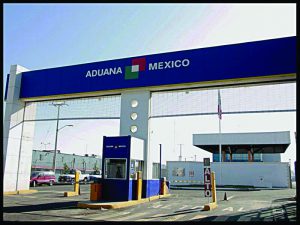
The Otay Mesa commercial port of entry will be one of the first land ports in Mexico to have an unmanned customs process as part of a new pilot program by Mexican customs.
The Customs Technological Integration Project (PITA, in Spanish) is a comprehensive initiative that aims to automate, facilitate and streamline the processes of entry and exit of goods in Mexico’s customs.
Under PITA, there will be a modernization of 60 points of inspection that represent more than 99 percent of the customs process of commercial goods, and that also represent 52 border crossings in Mexico.
The project objective is to optimize the operation for the entry and exit of goods from Mexico, increase surveillance measures that inhibit or identify illegal acts and act in a timely manner against those that attack national security.
Mexican Customs Administrator in Tijuana Jorge Fernando Boy Espinoza made a presentation about the project to members of the Otay Mesa Chamber of Commerce at one of their monthly events held at the San Diego Country Club.
“One of the program benefits is that Mexican customs will require less staffing,” said Executive Director of the Otay Mesa Chamber of Commerce Alejandra Mier y Teran to La Prensa San Diego. “With the automation that is planned, a system will be in charge of the customs process instead of an inspector that will be monitored through cameras in a central office.”
This state of the art system will basically automate cargo customs clearance through a paperless and human-less process. As trucks pass through lanes of inspection, RFID technology will be used, an innovation already used at the U.S. ports of entry for Ready Lane and Sentri users. The risk management system will analyze the merchandise info and let the truck driver know if it needs to be sent to secondary inspection through a message displayed in a screen. No booths or inspectors will be at the lanes of inspection and the system will be managed through a central computer system within Mexican Customs. Partial implementation will be in place in Tijuana, as early as June 2017.
“This new process should be quicker, and that’s one of the benefits that we care about as Otay Mesa Port of Entry users. We want to have an expedited crossing, so for us this is an important project,” Mier y Teran said. “This program also removes the subjectivity to the cargo.”
There was a $44 billion in trade through the Otay Mesa commercial port of entry, last fiscal year.
Latest articles