Photo Credit: Rick Loomis/Los Angeles Times/Getty Images
More working families in San Diego are seeking help putting food on the table. According to the San Diego Hunger Coalition’s June 2026 estimate, more than 200,000 children in San Diego County live in households that cannot consistently afford three nutritious meals a day.
That number should trouble all of us. But it should not lead to judgment. It should lead to action.
Families are working hard and still struggling to keep up. Rent, childcare, groceries, transportation and other basic necessities continue to stretch household budgets. At the same time, changes to federal safety-net programs are creating even more uncertainty for families already living paycheck to paycheck.
At Chicano Federation, we see the impact of this moment every day.
Food insecurity does not always mean a child misses a meal. It can mean a parent stretching groceries for several extra days, buying less nutritious food because it costs less, or making impossible choices between groceries and other basic necessities.
No parent should have to make those choices.
For more than 57 years, Chicano Federation has worked alongside San Diego families through early childhood education, affordable housing, nutrition programs and community-based services. At our Community Resource Center, families can access food, diapers and clothing, along with help navigating resources such as CalFresh.

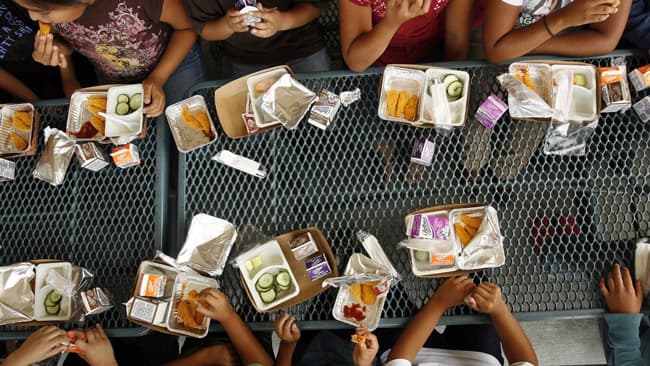
Last year, our child nutrition program supported the provision of 3.1 million nutritious meals to 7,165 children across 56 ZIP codes. Through the federal Child and Adult Care Food Program, we partner with family childcare providers to help ensure children have nutritious meals they can count on throughout the day.
But providing meals is only part of the solution.
Every child deserves access to nutritious food. Every family deserves the dignity and stability that come from being able to meet their basic needs. Parents should not have to choose between feeding their children, paying rent or keeping the lights on.
And at a time when so many families are struggling, we should be making it easier, not harder, to get help.
Changes to CalFresh under the federal law known as H.R. 1 are making it harder for some households to access food assistance. For immigrant and mixed-status families, fear and uncertainty can create additional barriers to seeking support.
This is why strong, trusted community organizations matter. We can meet families where they are, connect them with resources and make sure asking for help is met with dignity, not stigma or judgment.
But nonprofits cannot do this alone.
Government has a role. Philanthropy has a role. Businesses have a role. Community organizations have a role. And all of us, as neighbors, have a role to play.
Because food insecurity rarely exists on its own. A family struggling to afford groceries may also be struggling with rent, childcare, transportation or diapers. Supporting families means seeing the whole family and recognizing how deeply these needs are connected.
No parent should have to tell their child there is not enough food. No child should have to wonder where their next meal will come from.
Every child deserves nutritious food. Every family deserves dignity, stability and the opportunity to thrive. These should not be privileges reserved for those who can afford them.
The choices we make in this moment say something about the kind of San Diego we want to be. We can be a community that refuses to leave families behind and that shows up for one another when times are hard.
Liz Ramírez is CEO of Chicano Federation, which provides early childhood education, nutrition, affordable housing and community support services to San Diego families.